
Everything you need to know about gutter down spouts and why your NC home needs them.
If you're wondering whether your home really needs downspouts, the short answer is yes.
Downspouts are one of the most important parts of your gutter system. Without them, rainwater simply pours over the edge of your gutters, leading to erosion, foundation damage, flooded crawlspaces, and costly repairs.
Many homeowners throughout Raleigh, Cary, Apex, Holly Springs, Fuquay-Varina, and the greater Triangle area don't think much about their downspouts—until they notice standing water, washed-out landscaping, or moisture problems inside their home.
In this guide, we'll explain how downspouts work, why they're especially important in North Carolina, and how proper installation protects your home for decades.
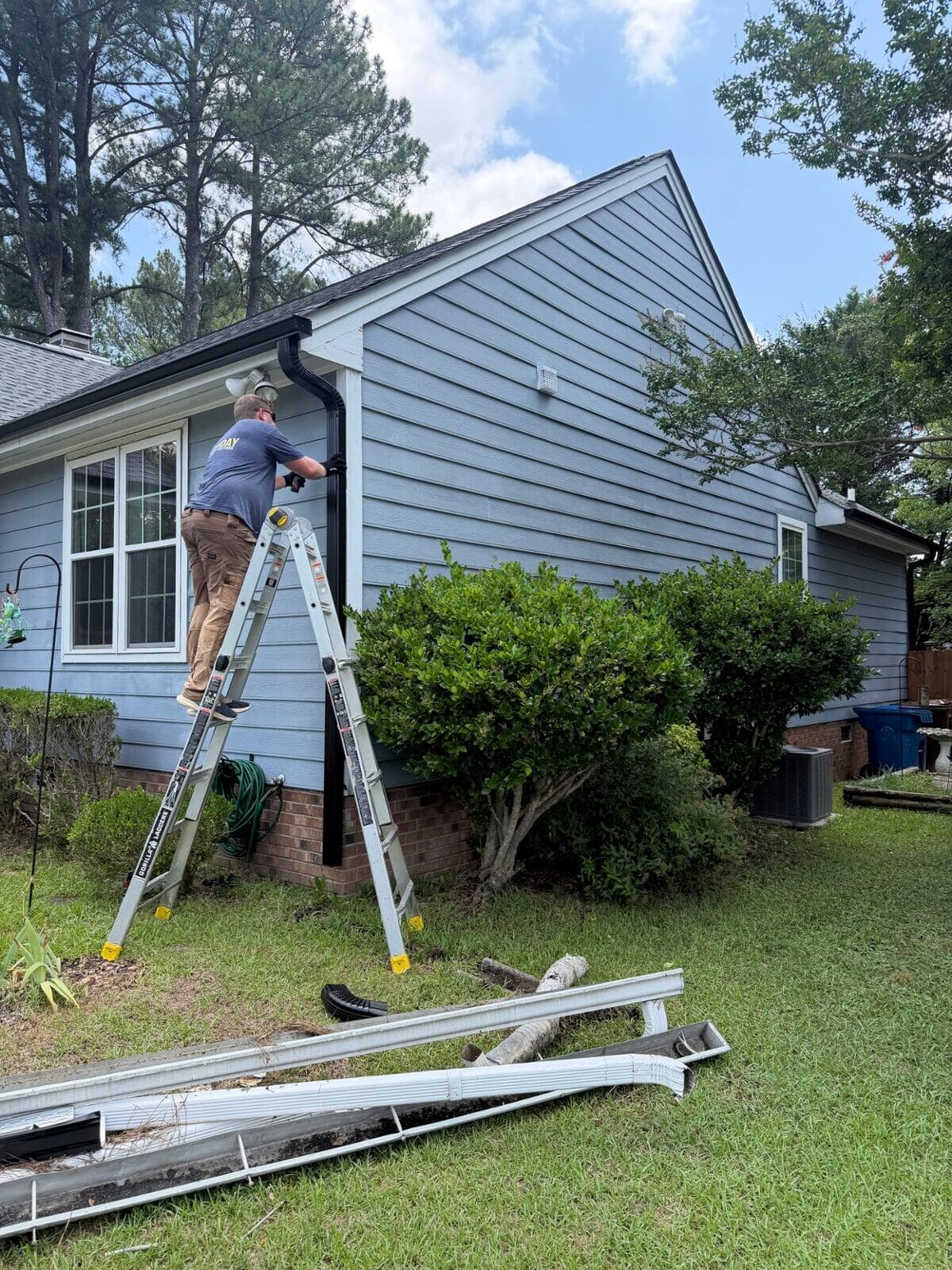
Why Downspouts Matter in North Carolina
North Carolina's climate creates unique drainage challenges that make properly designed downspouts more important than many homeowners realize.
Our region experiences:
- Heavy summer thunderstorms capable of dropping several inches of rain in a short period
- Clay-heavy soils that absorb water slowly
- High humidity that encourages mold and mildew
- Expanding and contracting soil that places stress on foundations
- Tropical systems and hurricanes that produce prolonged, intense rainfall
Without properly sized and positioned downspouts, all of that water ends up exactly where you don't want it—around your home's foundation.
How Downspouts Work
Although they're simple in appearance, downspouts are engineered to control how rainwater moves away from your home.
They rely on three important principles:
Gravity
Water naturally flows downhill. A properly installed downspout provides the path of least resistance, allowing water to leave the gutter quickly.
Capacity
Every downspout has a maximum amount of water it can carry. If it's too small, water backs up into the gutters and eventually spills over the edge.
Water Distribution
A good drainage system doesn't just move water—it moves it far enough away from your home that it can't damage your landscaping or foundation.
When any of these principles fail, homeowners often experience:
- Overflowing gutters
- Washed-out mulch
- Soil erosion
- Crawlspace moisture
- Mold and mildew
- Foundation settlement
- Siding stains
- Basement or crawlspace water intrusion
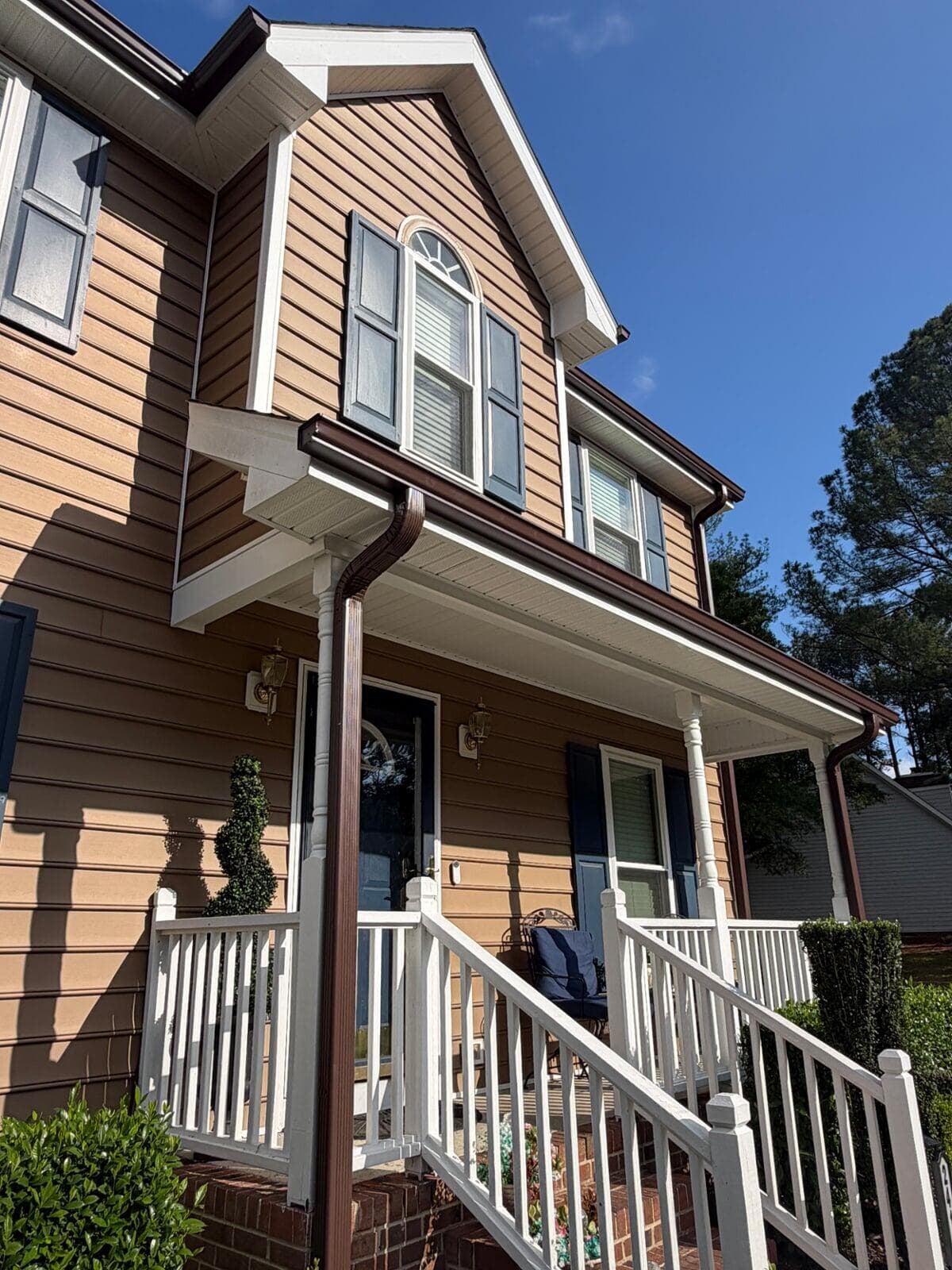
Why 3x4 Downspouts Are Becoming the New Standard
Many older homes around Raleigh and the Triangle still use 2x3-inch downspouts.
While they worked well decades ago, today's homes often have:
- Larger roof surfaces
- Higher roof pitches
- More complex rooflines
- Greater water runoff
A 3x4-inch downspout can carry significantly more water, making it a better choice for many modern homes.
As a general guideline:
One properly sized downspout is recommended for approximately every 600 to 800 square feet of roof area, although roof design, rainfall intensity, and gutter configuration can all affect the ideal layout.
Simply upgrading from 2x3 to 3x4 downspouts can dramatically reduce overflowing gutters during heavy North Carolina storms.
Proper Downspout Placement Matters
Installing fewer downspouts to improve curb appeal might seem like a good idea—but it often creates drainage problems.
Professional installers evaluate factors such as:
- Roof pitch
- Roof valleys
- Overall gutter length
- Water flow direction
- Landscaping
- Sidewalks and driveways
- Soil conditions
- Yard slope
Proper placement ensures rainwater exits efficiently without creating erosion or pooling around your home.
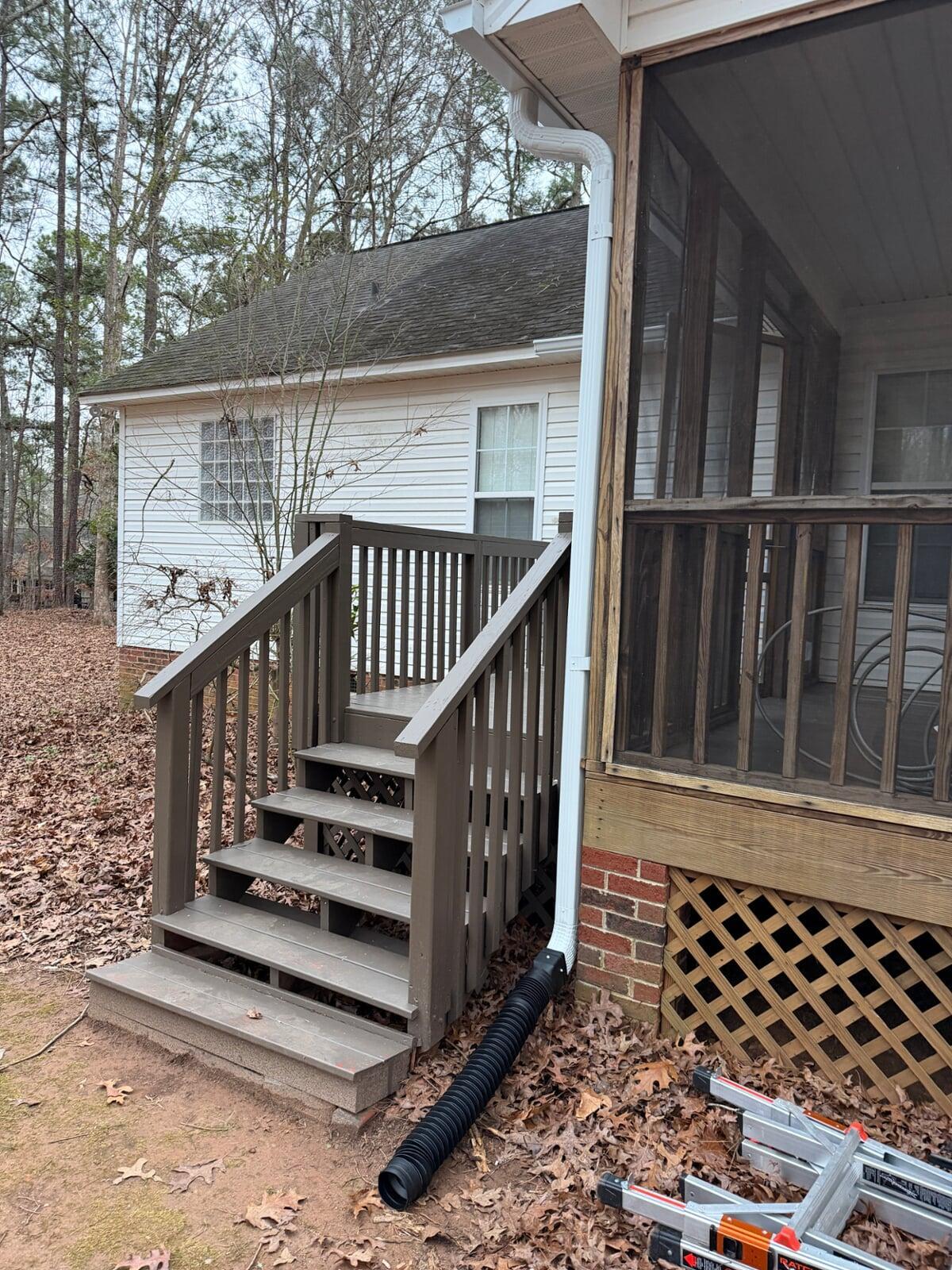
Common Downspout Mistakes
Many drainage problems are caused by improper installation rather than clogged gutters.
Some of the most common mistakes include:
- Too few downspouts
- Downspouts that discharge next to the foundation
- Water directed into flower beds
- Downspouts ending on walkways
- Poor elbow orientation that increases clogging
- Undersized downspouts for the roof area
These issues often don't become obvious until the next heavy storm.
Protecting North Carolina Clay Soil
Unlike sandy soil, clay drains slowly and holds water near the surface, increasing the likelihood of:
- Landscape erosion
- Washed-out mulch
- Standing water
- Foundation movement
- Lawn damage
Properly installed downspouts help direct water away before these issues develop.
Additional drainage solutions may include:
- Splash blocks
- Downspout extensions
- Underground drain lines
- Pop-up emitters
- French drains where appropriate
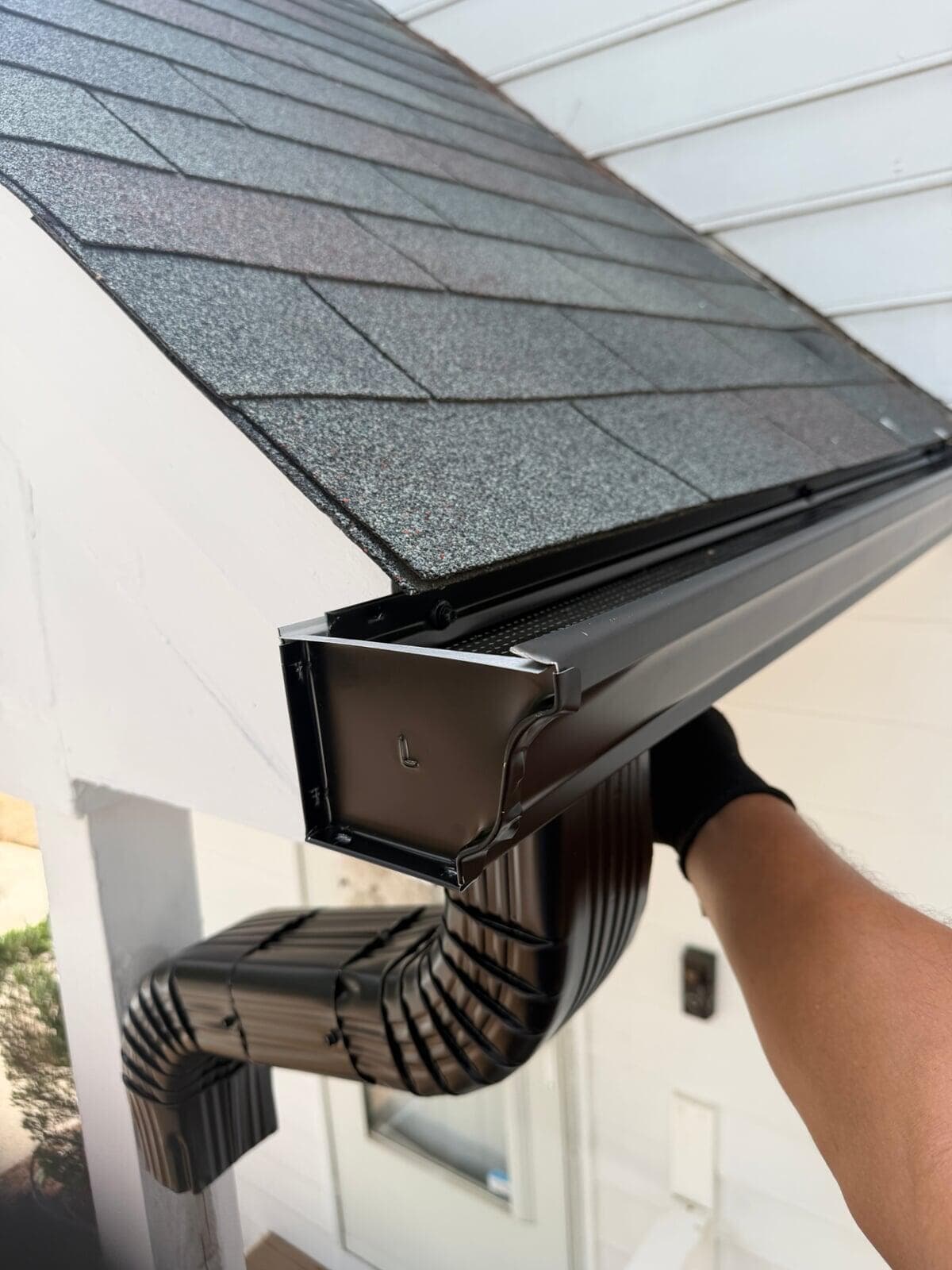
Your Foundation Depends on Proper Drainage
One of the most important jobs your downspouts perform is protecting your home's foundation.
When rainwater collects beside your home, it creates hydrostatic pressure—the force of water pushing against your foundation walls.
Over time, this pressure can contribute to:
- Foundation cracks
- Crawlspace moisture
- Mold growth
- Bowing foundation walls
- Termite activity
Whenever possible, downspouts should discharge at least 4 to 6 feet away from the foundation, and even farther if the yard slopes toward the house or drains poorly.
The Difference Between Builder-Grade and Professional Installation
Not all gutter installations are created equal.
At Illumiday Lighting & Gutters, we pay attention to details that many installers overlook, including:
- Proper downspout sizing
- Correct elbow orientation for improved water flow
- Secure fastening to reduce movement during storms
- Color-matched components for a clean appearance
- Strategic placement to minimize future clogs
- Proper slope for underground drainage systems
- Matching outlet sizes to gutter capacity
These details improve both the appearance and long-term performance of your gutter system.
Signs It's Time to Upgrade Your Downspouts
Your downspouts may need replacement if you notice:
- Gutters overflowing during heavy rain
- Standing water around your home's foundation
- Washed-out mulch or landscaping
- Soil erosion
- Water stains on siding
- Mold or mildew near the roofline
- Frequent clogs
- Older 2x3-inch downspouts on a larger home
An upgrade to larger downspouts often resolves many of these problems without replacing the entire gutter system.
Why Homeowners Across the Triangle Choose Illumiday
At Illumiday Lighting & Gutters, we believe a gutter system should do more than collect rainwater—it should protect your entire home.
Our installations are designed with long-term performance in mind, combining engineering, craftsmanship, and attention to detail to create drainage systems that withstand North Carolina's toughest storms.
Whether you need new seamless gutters, larger downspouts, gutter guards, or a complete drainage upgrade, we'll design a system that's built specifically for your home—not just installed to meet the minimum standard.
Frequently Asked Questions
Are downspouts required on every home?
Yes. Every gutter system needs properly sized downspouts to safely carry rainwater away from the roof and foundation.
How many downspouts should a house have?
The answer depends on your roof size, gutter length, roof pitch, and local rainfall. Most homes require multiple downspouts for adequate drainage.
Are 3x4 downspouts better than 2x3?
For many homes in North Carolina, yes. Larger downspouts move more water and are less likely to overflow during heavy storms.
How far should a downspout discharge from my foundation?
A minimum of 4 to 6 feet is generally recommended, although homes with poor drainage or sloping lots may require longer extensions or underground drainage.